A Supernatural History of Cats: Witchcraft and Mythology

Updated: Jul 3

In this article:
When we look at our cute, fluffy domestic moggies, it's hard to imagine that they were once feared as symbols of evil and the supernatural. Cats have been long misunderstood throughout the ages - and still are to this day. This is largely due to their nocturnal habits, elusive behaviour and.... ahem, nonchalance!
While cats were considered bad omens by some cultures, others like the Ancient Egyptians believed they held divine connections that granted protection, fortune and luck. This article explores how these mysterious creatures have inspired stories and beliefs that stretch back thousands of years.

The Witch's Familiar
The Middle Ages in Europe was a particularly tough time for cats, especially black ones, as they were linked to witchcraft and dark magic. Many believed that cats were demonic entities in disguise - and even the devil, himself. It was thought that witches could transform into cats or use them as familiars to do their bidding. This might have been help with casting spells, spying on people and causing harm.
Association with a familiar was also used to convict witches during the Salem witch trials, but what gave cats this bad rep to begin with?

The earliest reports of witches' familiars date back to 1510 and mention other animals like dogs, rats and toads. Later in 1566, a pamphlet details one of the first women in England to be tried and executed for witchcraft. Agnes Waterhouse confessed to owning a black cat named Satan, given to her by her sister, Elizabeth Francis. There are many bizarre tales about Satan, from granting wishes to killing livestock and murder!
Could Satan the Cat be the reason why our feline companions are so famously associated with witches?
Unfortunately, this connection created widespread fear that had tragic consequences for cats through mass extermination in some regions. The decline in population is thought to have contributed to the Black Death, since cats were natural predators for disease-carrying cats that were subsequently left to flourish. Whether this is fact or theory, it's hard to know for sure.
Nevertheless, these ancient beliefs have gone on to inspire modern film and TV - think Salem from Sabrina the Teenage Witch or Binx from Hocus Pocus.

Cats As Supernatural Beings
As born hunters, it's easy for a cat's predatory behaviour and frightening anatomy to put people on edge, so we can only imagine how they were perceived in an era plagued with superstition. Let's look at some of the traits that make cats natural candidates for supernatural associations.
Glow in the Dark
Even as a cat lover, I can think of more than a few instances where I've been startled by a pair of glowing orbs in the middle of the night, usually accompanied by a scurrying shadow that sends me tumbling to near death. The reflective eyes of a cat are definitely spooky in the right setting, and as a creature that's built for stealth, they make for some great jump scares!
Related post: Cat Vision: How Do Cats See the World?
Creatures of the Night
Cats are often mistaken for being nocturnal but, in fact, their most active hours are dusk and dawn for hunting wild rodents and birds. They're definitely not vampires, although it's easy to make the comparison with their deadly fangs and spine-tingling hissssss.

The Sixth Sense
It's not only a cat's teeth that are sharp, but their incredible sense of hearing - some of the best in the animal kingdom. Cats are alert to the faintest creak on the stairs and the slightest shift in the air. They'll stare into empty corners of your ceiling and dash across a room when there's nothing there. This doesn't necessarily mean there's a ghost in your house - but if there was, your kitty will be first to detect it.
Lone Wolf
Cats are unique in many ways, especially as the only domestic pet that's permitted to leave the home - and even hunt for food - because we know they're capable of taking care of themselves. If left to their own devices, a cat will come and go as it pleases. This has led to the theory that cats domesticated themselves and humans are just a convenient source of food, shelter and attention.
This is easy to see when you lovingly call your cat's name, only to be completely ignored when you know full well that they can hear you. A cat's aloofness and unpredictability isn't for everyone, but any owner that shares a bond with their cat will understand that they have their own special ways of communicating. This makes them all the more intriguing to me.

Cats in Folklore and Superstitions
Cat superstitions vary by culture, and the Ancient Egyptians weren't the only ones to hold them in high regard. Traditionally, cats are seen as symbols of good luck in China; and in Russia, they're believed to protect the home from evil spirits.
In Scottish lore, a strange black cat appearing at the home is a sign of prosperity; while a woman owning a black cat in Japan is thought to bring luck in love. This contradicts beliefs surrounding black cats in other cultures where they're heavily demonised. Italian myths, for example, hold that they're omens of death and misfortune.
The Cat Sith, translated as "Fairy Cat", is a Celtic folk creature that was said to resemble a large black cat with a white spot on its chest that haunts the Scottish Highlands. It had the ability to walk upright on its back legs, but only when no one was watching - which is one thing I can believe! If you're ever visiting Scotland, be sure to keep a lookout for the Cat Sith.
Everyone has a story to tell, and it's most likely that, for bad or good, none of them hold any truth.

Cat Mythology and History
As mentioned, the Ancient Egyptians are renowned for their love of cats, as shown in feline-esque statues like the Great Sphynx of Gaza; carvings; amulets and deities. The goddess, Bastet, was depicted with the head of a lioness and later changed into the full form of a cat. As the goddess of love, domestication, fertility and protection, she was known to be very important.
The Egyptians also worshipped Madfet, the first known goddess that had the head of a leopard or cheetah. She was the goddess of justice and protected the sun god, Ra; as well as the pharaoh's chambers from snakes and scorpions. The lioness goddess, Sekhmet - sister to Bastet - was the goddess of war, plague, healing and protection of pharaohs.
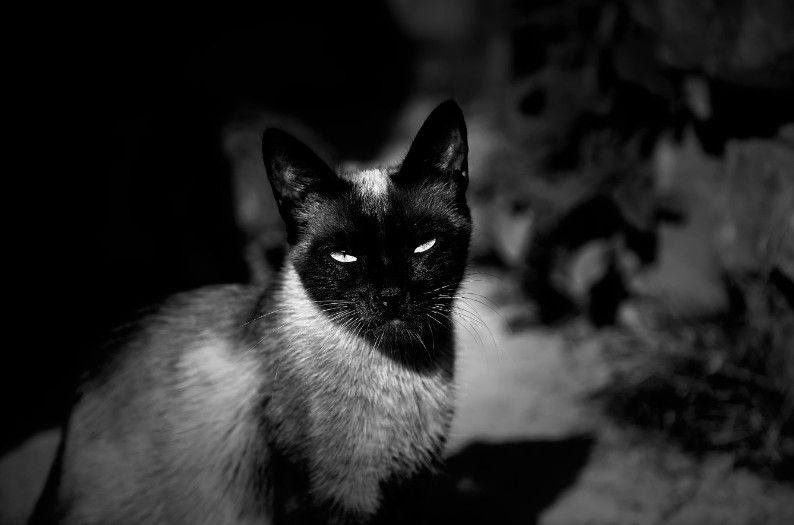
Cats were perceived to have protective qualities due to the killing of rodents that destroyed grains and crops; and chasing away snakes and scorpions. The Ancient Romans also recognised their usefulness, and their independent natures made them symbolic of liberty and freedom.
Libertas, the Roman goddess of liberty, was often depicted with cats at her feet. Freyja, the Norse goddess of love, beauty and war, travelled in a chariot that was pulled by two large cats.
The cat's reputation was soon to darken when Egypt became a Roman province and adopted Christianity as its official religion. It was the rise of the Roman Empire that caused Christianity to spread across Europe, as it did Egypt, banning pagan customs, traditions and destroying temples. People became suspicious of cats due to their association with paganism and pagan deities like the Egyptian goddess, Bastet.
According to theories, early Christians found the independent nature of cats to be a rebellion against religious teachings that said Adam (and subsequently all men) had dominion over animals. Furthermore, the Catholic church began to declare cats as incarnations of the devil, and so began the vilification of our feline friends in Medieval Europe.

Cats and the Paranormal
The cats' mythology is so vast that, to this day, they continue to feature in ghost stories and other paranormal phenomena. Many people report cats behaving strangely in areas that are suspected to be haunted, as if they're aware of an unseen presence. Paranormal investigators, psychics and mediums claim that cats, like many animals, are sensitive to supernatural energies that most of us are unable to detect.
I once heard about a friend of a friend, whose husband passed away. Some days later, a random cat walked into the house and went to sleep on the deceased's shoes. It continued to return, which she took as a sign from her beloved that he was still with her.
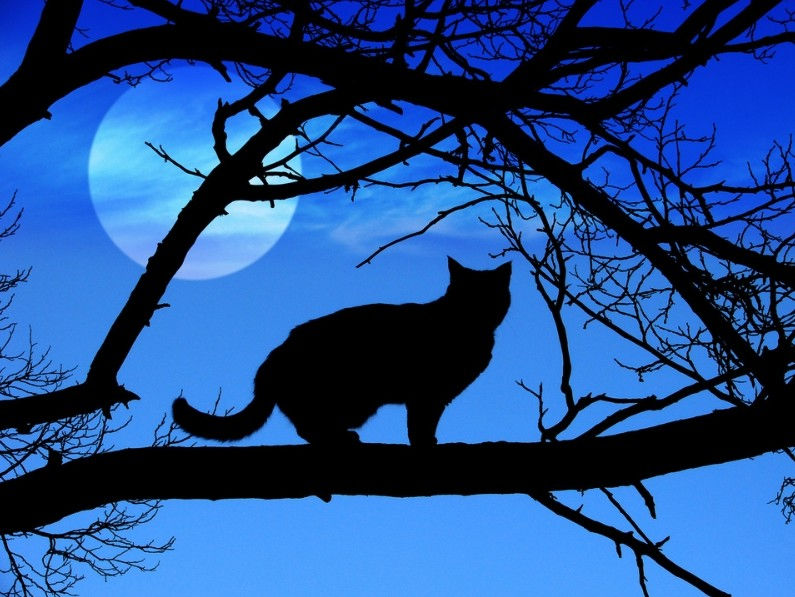
A personal story of my own, after my cat, Dillon, passed away, both my mum and me kept hearing the sound of him meowing in the hallway. Was Dillon letting us know he was still around or were our imaginations to blame?
Films, TV and books reinforce this connection, with cats often portrayed as mystical creatures that are linked to the spirit world. Who knew that hundreds of years after the famous witch trials, cats would still be dubbed as the witch's familiar, inspiring Halloween costumes and decorations as if in celebration of this devastating era of history.
Today, cats mostly stand as beloved pets, but echoes of old superstitions still influence how some people view them. By recognising the history of cats and the challenging myths that led to their persecution, we can acknowledge that their natural instincts and behaviours do not deserve to be punished. This should encourage kindness and curiosity rather than fear.
In the grand scheme of things, humans are the cause of much more evil than the domestic cat!
Are you superstitious? Do you cross the road whenever you see a black cat? Share your spooky feline tales in the comments.


Comments