Why Do Cats Bring You Dead Animals or Toys As Gifts?

Updated: Aug 29
*As an Amazon Associate I earn from qualifying purchases at no cost to you.

In this article:
As a lifelong cat parent, I've had my fair share of undesirable "gifts" brought into the home - and they're not always dead. Mice and small birds are common prey animals because they're small, easy to hunt and almost always found in gardens. Larger animals like squirrels and rabbits are also common targets. When I was younger, I distinctly remember one of the family cats dragging a full-grown pigeon through the cat flap - a most impressive catch!
For thousands of years, we relied on cats for killing vermin and protecting grain stores - it was a huge part of domestication. Now that we no longer require those skills, cats are regarded as pests by many. Their predatory instincts are retained from their wild ancestors when it was essential for survival. The modern-day luxury of canned food doesn't take the hunter out of the cat, even if they're not driven by hunger.
You might be wondering why cats feel the need to share their hunting trophies - or why they're hunting at all, if not for food. This behaviour has deep roots in their instincts and social nature, which begins before a cat is born.

Where Do a Cat's Hunting Instincts Come from?
A cat's behaviour is a mixture of nature (genetics and instinct) and nurture (environment and experience). We know that hunting is instinctual and cats are attracted to small, fast-moving things. My current cats, Drax and Simba, didn't have a mother to learn from - I've been their parent almost from birth, and I certainly don't chase rodents around the house or garden!
Despite this - and being indoor cats - they both present me with their toys, just like other cats bring in wild rodents and birds. So, where does experience come into play?
In the wild, mother cats teach their kittens to eat and hunt by bringing dead or injured prey back to the nest. As kittens become more mobile and develop their hunting skills, she'll release live prey in front of them. Kittens learn that they have to capture it because when the prey tries to escape, the mother will catch it again and take it back to them.
This is one reason why your cat might not be killing animals before bringing them home. In fact, they often die from shock rather than injuries - or accidental killing, since fangs are extremely sharp.

Why Do Cats Bring Dead or Injured Animals Home?
Most domestic cats won't have these early experiences, since weaning kittens is the responsibility of the owner, which emphasises the strength of a cat's survival instinct. Hunting behaviours have been a part of their genetics for thousands of years, and they aren't likely to fade - no matter how much you shout at your cat.
Punishment is extremely confusing and damaging for a cat that's merely demonstrating that it sees you as part of their social group. It's not "teaching" you how to hunt, but by bringing their catch back to the home - their core territory - it shows that they feel secure in your presence.
Cats may want to consume their prey undisturbed and away from threats, or store it out of reach from other predators that might steal it. Offering their catch is a huge gesture of trust, so throwing it back in their furry faces is not cool!
It's not unusual for cats to bring other items home - my previous cat, Dillon, once returned with a cooked sausage that he'd stolen from a neighbour's barbecue. This can also apply to random objects or anything else that your cat finds interesting and wants to inspect further.

Why Do Cats Play with Their Prey?
This is something I've witnessed a lot over the years, especially with insects like flies, spiders and daddy-longlegs that get into the house during summer. Unfortunately, Drax eats them before I can do anything; but Simba enjoys batting them around, leaving them alone and then going back to finish tormenting them later.
This curious behaviour looks like cats are playing with the insect or animal, and I'm certain there's some degree of entertainment. However, this practice is used to tire the prey out and make it easier to kill, reducing the cat's risk of being injured during the hunt.
A small reminder that there's always a method to your cat's madness. They rarely misbehave for the sake of misbehaving, even if it's to get your attention.
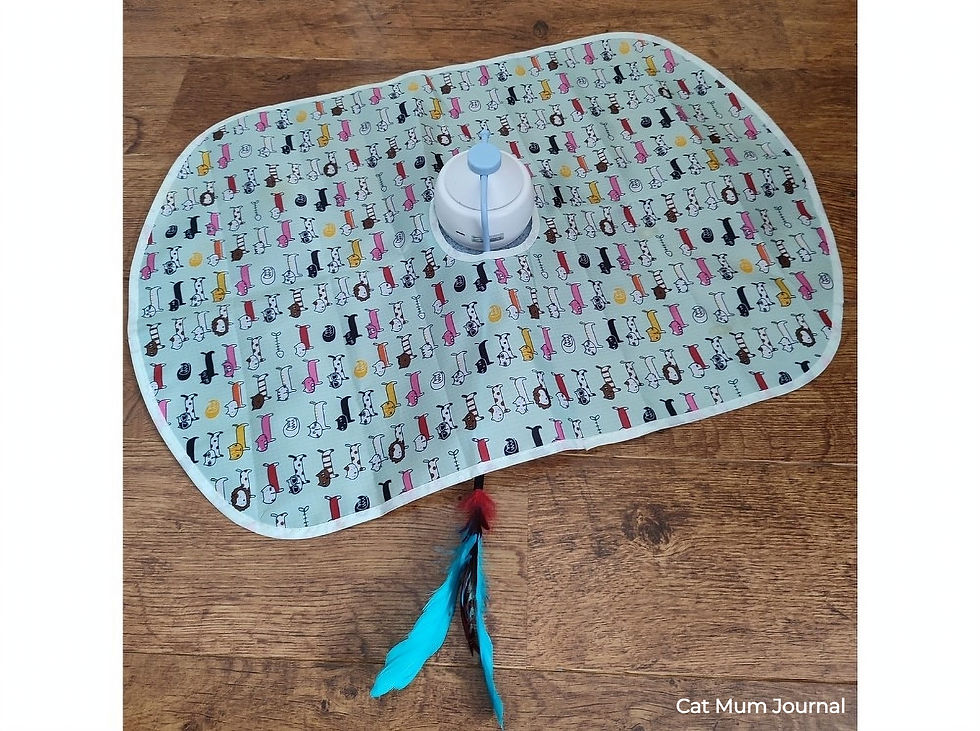 Tyasoleil 4-in-1 Interactive Cat Toy inspires natural hunting instincts with hide-and-seek feathers, flying feathers and a laser beam. Includes 3 speed settings and is USB rechargeable. |
The Importance of Exhibiting Natural Behaviours
Hunting provides mental stimulation, physical exercise and enrichment, all of which are crucial for a cat's wellbeing. Toys are designed to help replicate a cat's hunting behaviours - stalking, chasing, pouncing and catching - which highlights the importance of play.
Playtime shouldn't be something that you engage in now and then when you have a few minutes to spare. Cats need opportunities to exhibit their natural instincts and behaviours to avoid other issues like stress and aggression - this is especially true for indoor cats.
Simply, hunting is a fun sport - unfortunately, this isn't limited to cats. There are some rather distasteful humans in this world and no one punishes them.

What Should I Do When My Cat Brings Me Prey?
Now that you better understand a cat's motivation for bringing dead or injured animals into the house, here are some tips on how to respond appropriately.
Stay Calm and Avoid Punishment
Finding a bloodied animal on your kitchen floor or an unwelcome visitor scurrying across the room can be a thing of nightmares; but to your cat, it's the most natural thing in the world. In their mind, they're doing a great job and no amount of punishment or discipline will deter them from doing it again.
It might help to recognise some of the compromises that cats make to live with humans, given their highly independent natures. From sharing their territory to eating what we feed them, scratching and toileting where we decide; and playing with the toys they're given.
Thank Your Cat with Gentle Praise
Praise is one way to respond - not too much as you don't want to encourage them any more - but this reinforces the positive bond you share. I happen to love rodents and have owned everything from mice and rats to lizards and birds, so it's never pleasant to see an animal suffering at the paws of my felines. Yet I understand and respect them enough to put my feelings aside.
Alternatively, you can keep it neutral by ignoring your cat and removing the prey.

Remove or Dispose of Prey Hygienically
Whether the animal is dead or alive, it's best to prevent your cat from eating it. Hunting is one of the most common ways for cats to catch worms and fleas, and there's also a risk that rodents may have consumed poison put down by humans. This can make your cat very sick.
Always wear gloves or use a paper towel to dispose of the animal. If it's still alive then you might consider transporting it to an area outside of your cat's roaming grounds and setting it free. If not, it'll likely return to its home and your cat will know where to find it again. That doesn't mean it'll be safe from other predators, but it gives it a fighting chance.

Using Toys and Play to Redirect Hunting Behaviours
Giving cats an outlet for their hunting instincts will help to satisfy their drive and tire them out. Cats respond to movement: feather wands are great for encouraging stalking, chasing and pouncing. Interactive toys have unpredictable motion patterns that keep cats entertained when you're busy or out of the house.
Mice, birds, fish and other soft toys that replicate prey are ideal but can get boring. If they're not holding kitty's interest then try one that's infused with catnip or battery operated, like the Nepfaivy Floppy Fish that stimulates real movement.
 Vealind Melody Bird is made from soft plush with a feather tail to mimic real prey. The toy is touch activated and makes a chirping sound whenever cats pat or swat it. |
Cats may still bring you their toys, and if they're anything like Drax, it might be accompanied by mewing and yowling while carrying them. Whether this is an extension of their hunting behaviours, attention seeking or an attempt to initiate play, it's not entirely known. However, research has shown that cats treat toys just like prey, so even when they're playing, they likely see the toy as their "catch".
Food puzzles and treat dispensers provide a tasty snack in place of birds and mice. Cat trees, shelving and scratchers also help to fulfill their feline needs; and hopefully distract them from terrorising the wildlife.
The FOVVZDIL Scratching Post is made from natural sisal and features 2 dangling balls; a feather with bells on a spring; and an interactive trackball base that includes lickable catnip.

Tips for Protecting Wildlife
Supervise or Limit Outdoor Access
Supervision gives cats the freedom to explore while protecting wildlife. You can use a harness and leash to take them on walks (if they're trained) or build a catio so they have a safe enclosure. This can be attached to the house by a cat flap, window or door and will give cats the opportunity to go outdoors without being able to hunt. This is highly recommended to give cats the best of both worlds, as the streets too can be a dangerous environment for cats.
If neither of these options are feasible, try keeping your cat inside during the hours of dusk and dawn. This is when animals like rodents and birds are most active and vulnerable to predators.
Related post: How to Harness Train Cats for Walking on a Leash Safely
Keep Wildlife Feeders Out of Reach
The RSPB reports that UK cats catch up to one hundred million animals over spring and summer. As high as this number seems, it's important to remember that no amount of training, punishment or cruelty will remove this natural behaviour.
Place bird feeders in segregated areas of the garden if possible, or make sure they're hung out of reach - remember, cats are able to jump up to six times their body length and climb trees! If your cat is continuously bringing in dead or dying wildlife then you should consider removing temptations altogether, as this only contributes to the problem.

Attach a Bell to Their Collar
A clever suggestion by Purina is to put a bell on your cat's collar so they lose the stealthy upper hand - or paw! The bell will jingle when your cat approaches, giving wildlife a chance to flee to safety. This method isn't guaranteed, which I can attest to having had collar-wearing cats that still brought home their fair share of trophies!
Feed a High-Quality Meat Diet
Cats Protection suggests that feeding your cat a diet that's high in animal protein could make them less likely to hunt. Some commercial cat foods contain as little as 4% meat, but they should be getting around 55% protein in their diet. Dry food in particular is packed with grains, vegetables and other fillers that are high in carbohydrates.
Fresh food companies like KatKin may be better suited to a cat that enjoys hunting. More information and recommendations can be found here: Fresh Raw and Cooked Cat Food: Tailor-Made Nutrition Sent to Your Door!
Summary
When your cat brings you prey (or a toy) it's not actually bringing you a gift, as much as we'd like to believe it's a gesture of love and affection - which it may well be, in their own "cat way". This behaviour connects your cat's wild instincts with its social bond to you, so the best way to return the gesture is by appreciating their unique way of communicating.
Not all cats bring prey to their owners as they all have different personalities, live in different environments and have different level hunting skills. A study from 2023 showed that active dominant, aggressive cats brought dead animals home more frequently than timid sociable cats, so there are many factors to consider.
Mentioned Products
Nepfaivy Floppy Fish Cat Toy
FOVVZDIL Scratching Post
Does your cat like to show off its hunting trophies? Let us know if this article helped or share your advice for other parents in the comments.


Comments