Pet Bereavement Support and Coping with the Loss of a Pet


In this article:
As someone who's had over fifty pets throughout the course of her life, I know a thing or two about loss and bereavement. Since this blog is dedicated to cats and most people I talk to are other cat owners, it was the initial focus of this very important article.
However, browsing through old photos - some of which are older than me! - it occurred to me that it makes no difference whether a pet has fur, feathers or scales. Nor does it matter whether they've been in your life for a day or a decade. This is for anyone going through the pain and heartache that I, myself, am all too familiar with.

In Memory Of
Thomas
Cats have been a part of my life since the day I was born. I can't remember Thomas the tabby, although I'm told he wasn't too thrilled when my parents brought me home from the hospital! He died from leukaemia, and despite being too young to have developed any kind of bond, he was family and it saddens me that he was taken from us too soon.

Barney and Charlie
Barney and Charlie were my earliest feline memories, although Barney - a black and white character - had a rather tragic ending when he was hit by a car on my eighth birthday. I remember standing there, crying in my neighbour's arms, staring at the lifeless body of our happy chappy.
Someone had found him in the road and brought him home in a bin bag. I don't know if or how much he'd suffered as there were barely any physical signs of the accident. This was of some comfort, although I always found it uncanny how my parents had originally found Barney in the street with a broken paw before taking him in. If I was superstitious then I might say they'd only delayed his fate.

I blamed the driver for many years, and if I'm honest then I still think about it now. Unfortunately, it's a risk that all outdoor cats face, but leaving him dead in the middle of the road was unforgivable. Perhaps he could have been saved, perhaps not.
In the end I had to accept it, because even my young self knew that Barney wasn't coming back. Yet it's remained a deep-rooted fear ever since, and part of the reason why my current cats live indoors.
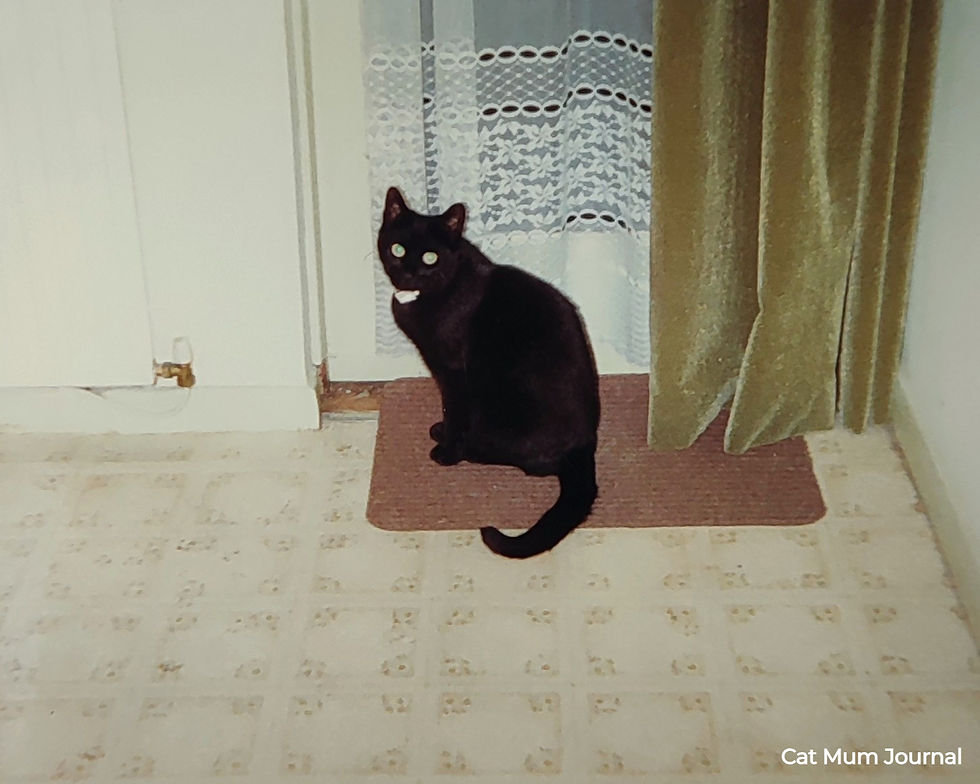
I'd lost other pets before and after Barney: hamsters, mice, gerbils, rats, guinea pigs, rabbits, lizards and birds. However, to lose an animal that was present for the first eight years of my life hit me on another level - not just in grief. Barney's death left a hole in our family unit that lingered well after his passing, and the worst part? I never had a chance to say goodbye.
Charlie, our spooky black cat, lived to a ripe old age. He turned senile at around seventeen and would walk around the house wailing at everyone in his final months. It was sad to say goodbye, but perhaps because I'd already endured the shock of losing Barney, it almost seemed like a blessing that Charlie had slipped away peacefully under euthanasia.

George and Topsie
Next came the arrival of George and Topsie, two grey and white quarter Persians - although George was initially Lucy before we realised he was a boy! It was my first experience with kittens but, for Topsie, it was short-lived. He was somewhat of a roamer and would disappear for days at a time, until he never came home.
Is not knowing better or worse? He was a gorgeous, fluffy boy so I wouldn't be surprised if someone had snatched him - which doesn't bear thinking about. The best I could hope for was that he was living a happy life with another family somewhere. Digging through old albums, photos of our lost boy are few and far between.

George became the ultimate boss cat, chasing off foxes in the garden and slapping dogs ten times his size. He was my first baby, since I'd picked him out as a kitten after he decided to take a snooze in my cap. You could say he chose me!
I loved all of our cats equally, but George was the closest bond I'd had with an animal - and I was a teenager by this point. While I was all attitude, he had the "cattitude" to match. He sure thought he was royalty and even had prime place at the dinner table on Christmas Day!

George developed some problems later in life, starting with urinary stones that caused him a lot of pain and stress. It was around this time that we adopted a black and white kitten named Dillon, who was a little terror in his infancy. George fell into a bit of depression, and it was heartbreaking to see the decline in his bold personality.
Things improved as he and Dillon grew to ignore each other, almost living separate lives. In fact, Dillon matured into an angel with fur and remains the most well-behaved cat I've ever had.

Dillon
George lived out his senior years as king of the household until his reign came to an end. He was put to sleep at home in his favourite place by the log fire with the whole family around him. He knew he was loved and he was ready to go, which in a strange sort of way, is the kindest death one could hope for.
Dillon's reaction to his passing was worse than I'd anticipated, for two cats that never really cared for each other. I remember catching him peering down the stairs when the vet arrived to euthanise George, as if he somehow knew what was happening.
Dillon never usually came into my room, but he kept me awake all night with the most obscure behaviour. Jumping on and off the bed, burrowing under the sheets, crawling into bags, shuffling around in corners, crying at the top of his lungs and doing everything he could to be noticed. I'd never seen him so unsettled, and I knew in my heart that he was grieving too.

In fact, this wasn't the last time that Dillon would react in such a manner. About a week before I lost my degu, Dante, he randomly climbed into Dante's cage. This might not sound like anything out of the ordinary for a predatory cat, but Dillon had lived amongst rodents all his life and never bothered a single one of them. So, why now?
I knew that Dante was on his last legs, and in the back of my mind, I also knew that Dillon was trying to warn me in his own special way. Dante may not have been a cat, but he'd spent seven years as a substitute parrot perched on my shoulder.
Just like my special needs bunny, Merlin, who spent half of his life living on a blanket by my side. Losing Merlin and Dante were crushing blows - and still are.

Having lost many pets for many different reasons, the hardest part for me is the emptiness that's left behind - the void of silence that can only be filled with precious memories. No cries for food, the unoccupied basket in the corner and the stray toy you find six months later that brings emotions flooding back to the surface.
Dillon lived as a single cat up to the age of around fifteen, when he started to deteriorate due to health conditions. Ultimately, his kidneys failed and you could say that he gave up, which led to the difficult decision to let him go. Even as an adult in my thirties, it was no less heartbreaking than losing Barney on my eighth birthday.

Which brings us to the present day with my now six-year-old cats, Drax and Simba, who I've talked about way too much on this blog! I'm reluctant to contemplate the future too much as it's unbearable to think that, one day, they'll be another memory. Despite having been through it all before, I know that I can never be truly ready for the end. All we can do is prepare for it and enjoy each precious day of their company.
Related post: My Story

The Grieving Process
I started writing this article with the grieving process in mind, since there are typically several stages a person goes through before healing takes place - which applies to both animal and human losses. To me it makes no difference, since I will always regard pets as family members.
Yet I realise these stages won't be the same for everyone because we process grief in different ways, and my experiences are as unique to me as yours are to you. In order to stay true to myself and this blog - which, after all, was inspired by my cats - I can only share those experiences for you to take the parts that resonate.

Grief as a whole is widely accepted and understood, but the actual process - that is, the emotions behind it - are less spoken about. This is even more true for animals as pet bereavement isn't always taken seriously by society. I think it's important to recognise some of those emotions, especially in relation to pets.
Shock
The shock or trauma of death has all kinds of effects on the body, even more so if it's unexpected. Feeling numb or refusal to accept the truth is a survival-based mechanism to protect the brain from being overwhelmed. Emotions will come when they're ready, but you can take this moment as a pause to prepare yourself for when reality sets in.

Guilt
When faced with the impossible decision to have your beloved companion euthanised, it's only natural to feel some level of guilt. Whether you're worried about acting too soon and missing out on valuable time together, or too late and risk more unnecessary suffering. I've had at least two pets die during surgery, which piles guilt on top of guilt.
Maybe you caught their illness or condition too late and blame yourself for not picking up on the signs. I know from experience that cats and many other animals are experts at hiding their pain until it starts to show in their behaviour. Even then, it can be so subtle that you may not think anything of it - and by the time you get them to a vet, it's already too late.
Your vet is your best friend in these situations, as they can offer advice on your pet's quality of life and the kindest option moving forwards.

Anger
Anger is the most destructive attachment to grief - I certainly felt pissed off when I was presented with my sweet Barney after being killed in a hit and run. Had he been human, it would have been a matter for the police.
Whether you're frustrated at a person, situation or God himself, it's a totally natural reaction. Feeling anger is not the same as acting on anger - no matter how much I wanted to punch that driver in the face.

Depression
Sadness knows no limits, whether you cry for a week or fall into a deeper state of depression. I know it's a cliché, but time really is the best healer. How you feel today won't be how you feel forever, but you must ask for support when it's needed.
If you're currently in mourning and struggling to process your emotions, it may help to learn about the five stages of grief to understand your own reactions and that what you're feeling is healthy and normal. It's not uncommon for grief to start before your pet's passing, also referred to as "anticipatory grief".

Preparing for Your Pet's Passing
Preparing for your pet's death is easier said than done, and not always possible if they die suddenly or unexpectedly. If your cat has a known illness and you've followed all of your vet's advice, then rest assured that you've cared for them to the best of your ability. Comfort and love is often the final gift we can give to our animal companions.
When the decision is made to have pets euthanised, some owners want to be with them while others find it too overwhelming. There's no right or wrong, and all your furry knows is that they're going into a deep sleep - free of pain and suffering. Sometimes you may not get the option, as is often the case with smaller pets that are put to sleep with gas and have to be taken to another room in the clinic.

I've had to make the painful decision to end a pet's life more times than I can count, and while it never gets any easier, letting go has become a process in itself. I know what to expect and I know I'll get through it - and so can you.
Do you think your furry would want to see you suffering, after all the love and care you showed them throughout the course of their life? For feeding them, housing them, keeping them warm and tending to their every need?
The answer, of course, is no!

Mourning Pets
It's surprising to me that, in an age where pets are treated like substitute children, society is less sympathetic towards the death of animals in contrast to humans. When Great Aunt Sally dies, who you only ever saw at family gatherings over Christmas, you get a few days off work and a never-ending stream of condolence cards through the mail.
When the cat that you shared a home with and nurtured for every day of its life passes over the rainbow bridge, you're lucky to get a few words of sympathy. I don't expect everyone to think of pets as family members, only to recognise those that do.
For people like myself, a loner and recluse growing up, pets were the only real friends I had. They were my constant, a living and breathing part of my daily routine. They helped me through the darkest times of my life, and when they're suddenly ripped from your world, it doesn't matter whether they had two legs or four legs. The grief, the pain, the loneliness is all the same.

When pain is dismissed, it leads people to suffer in silence and even question whether their emotions are valid. If this is you, I'm here to tell you in no uncertain terms that everything you're feeling is 100% valid.
For every person that says "it's just a pet" there are many others who'll tell you otherwise, but you don't have to take my word for it. According to statistics, 60% of UK households owned a pet in 2024 - of which 90% considered as part of their family. That's validation from over half of the population.
Bereavement isn't limited to death, for there are other reasons why you might be separated from a furry companion. Moving to a new country, financial issues, old age or any situation that affects your ability to care for an animal can wound just as deeply.

Getting a New Companion
Personally, I have mixed feelings about adopting new pets after a loss. On one hand, animals are incredibly healing, and to bring some joy back into the home after a period of hardship can be soothing for the heart. I've been in this situation myself without even realising it.
After Dante died, I swore I'd never have another degu - the pain was so raw that I didn't think it'd ever get better. A couple of months later, I found myself in a pet shop being eyed up by a lonely degu, clasping his little paws together as if begging me to take him home. Of course I crumbled, and Monty was such a character that he livened the place up no end.
But he wasn't Dante - in fact, they couldn't have been more different.

If you're contemplating using another pet as a "replacement" for your deceased companion, you risk causing yourself more heartache. You must treat them as the separate and unique personalities that they are, from which you can make new memories.
Furthermore, if you already have another cat then you shouldn't rush into getting a new one to keep them company. Even if they're clearly missing their companion, just like humans, they need time to adjust to the loss. Cats are territorial creatures, and too many changes at once can increase the stress they're already experiencing. The best thing you can do is offer them extra love and attention when they need it.

Help and Support
There are many forms of support for pet bereavement, despite the rules of society. You can find links to helpful resources in the next section, but you might consider:
Websites and articles.
Online forums and groups.
Helplines or chat lines.
Counselling.
Talking to friends and family.
Visiting your GP.
Some might be reluctant to get doctors involved - maybe they feel silly or that it's a waste of time - but anything that affects your mental health should be taken very seriously. A doctor may offer medical support with temporary medication, or make a referral to a counsellor or therapist that specialises in pet bereavement.
If a death comes unexpectedly then it's understandable that you might need more urgent support. The most important thing is not to let yourself suffer in silence when there are a wealth of people and organisations that are ready to help. If you don't try then you'll never know, and one phone call could make all the difference.

Pet Bereavement Organisations
Organisations like Cruse Bereavement Support, though not centred around animals, has lots of advice and supports the idea of "growing around your grief". Time is a great healer, and it's also what helps us to grow as a person. As we grow, grief takes up less space in our life. Some days might feel as raw as the day it happened, while other days you think about it less.
Sometimes healing can simply mean reaching a new version of normality, whereby you can acknowledge the grief without it overshadowing every aspect of your life. As long as you're not hurting yourself or anyone else, I don't believe there should be any kind of time limit on when you should stop being upset.
Blue Cross
You can call the Blue Cross helpline on: 0800 096 6606
They also offer support via email and live chat, or you can join their Facebook group. Contact information can be found here: Pet Loss Support
For further reading, I highly recommend this article: Time to Say Goodbye to Your Cat

Cats Protection
Chat with a trained volunteer by calling the Paws to Listen service on: 0800 024 94 94
For more help, advice and bereavement stories from other pet owners, refer to the webpage: Grief and Loss
I'd also like to direct you to the Cats Protection Memory Wall, where you can read stories about hundreds of kitties that changed people's lives - and even add your own memory.
RSPCA
Another fantastic resource, the RSPCA has a pet bereavement toolkit that includes advice and stories from pet owners just like me.
Learn more here: Pet Bereavement Toolkit

Honouring Your Pet's Memory
It might seem morbid to think about what you want to do with your pet's body after they pass. For me, this is when the grief really sets in because the initial shock is over. However, it's a great opportunity to honour their memory in a way that's personal and meaningful to you.
Here are a few ideas that I've found helpful:
Home Burial
Dedicate a sacred space in the garden where you can add something as elaborate as a plaque or simple as a rock with your pet's name painted onto it. Add a cute solar light, fairy lights or other decorations. You might want to plant a tree or flower to keep their memory alive.
A physical grave where you can spend time reflecting and speaking to your lost companion can be of great comfort.
Cremation
A more costly option depending on the animal, but it gives you the option of scattering their ashes in a special place or keeping them with you forever. Crematoriums offer urns in various styles, or you can buy one from sites like Amazon and Etsy. You can usually personalise urns with plaques, engravings or photos in some cases.
I've got several urns displayed around my home, which I'm sure my fellow pet parents will understand!
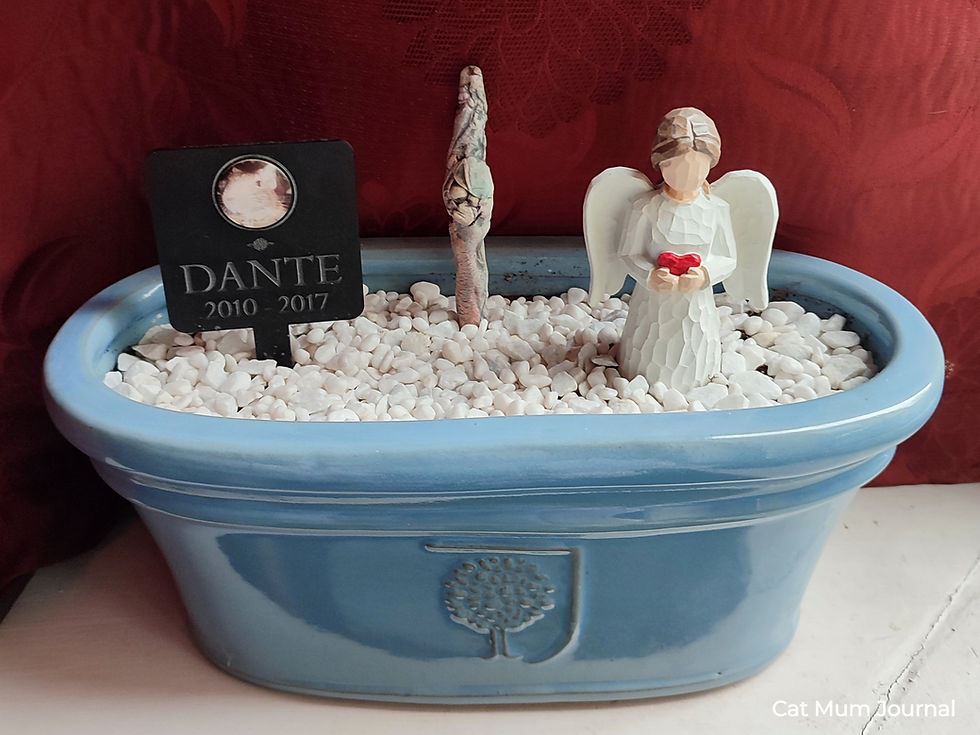
Plant Pots
For smaller pets like rodents, I make a DIY grave using a plant pot so I can take them with me wherever I move to. I add coloured pebbles, plaques and ornaments over the top of the soil. Many friends and family members have since adopted this unique burial method and find that it really helps.
Memory Book or Scrapbook
This is similar to a photo album that you can fill with precious memories of your pets. Print out all of your favourite photos so you can look back whenever you need to feel their presence.
Keepsakes
Parents often keep locks of their baby's hair, and the same can be done with animals. There are lots of containers you can use, from cork-topped craft jars to engraved boxes and cat-shaped pots. Some companies make specialised jewellery where you can have your pet's fur or ashes incorporated into pendants, rings and other accessories.
You may also want to keep your cat's collar, blanket, favourite toy or other belongings and place them all together inside a box. Again, an online search will come up with hundreds of personalisable options or you can decorate your own.

Paw Prints
Take a copy of your cat's paw prints with pet-safe ink pads or clay impressions, both available as memorial kits. These can be put on display in your home or added to your memory box.
Artwork
From portraits and photographs to personalised keyrings, mugs, cushions and decor, modern technology gives us so many options. Seeing a familiar face around the home isn't the same as your pet being in the room, but they can bring joy to your life in other ways.
Tattoo
If you're into body art, a tattoo of your pet's name, portrait or paw print is a permanent reminder of the bond you shared.
Donation
Making a donation to an animal charity gives a sense of purpose and reward, as there are still many animals on this earth that will benefit from your kindness and generosity.
This is likely the hardest article I'll ever have to write, but I'm truly honoured to be able to share it. Anyone is welcome to share their own story of pet loss, either by getting in touch or commenting so we can all support each other. Let's create our very own memory board right here!


Comments